
PupFlask
Read the PupFlask Large Dog Water Bottle review
Portable dog water bottles
PupFlask Large Dog Water Bottle
Large dogs, multi-dog walks, longer hikes
A tired, happy dog at the end of a trail is the goal. Getting there safely takes three things: enough water, a harness that does not rub, and a little planning.
 By the PetBea teamUpdated October 31, 2026
We may earn a commission when you buy through the store buttons on this page, at no extra cost to you. It never decides what we recommend. How that works
Skip the reading: these are the picks, with a direct store link.
Large dogs, multi-dog walks, longer hikes
Small to medium dogs on everyday walks
Hikers and everyday walkers, small to large
Strong pullers and leash training
Dogs cannot tell you they are thirsty until they are already struggling, and they will often keep going long past the point where they should rest. So the job on a hike is mostly yours: carry the water, read the signs, and turn around before your dog has to.
Dogs cool themselves mostly by panting, which uses a lot of water. On a warm day or a long trail, plan to offer water every 20 to 30 minutes, and more often in heat. Do not count on streams: water can carry parasites, and some trails have none.
For long hikes and big dogs, capacity matters more than weight. A stainless bottle with a fold-out bowl holds enough for a full morning.
Opens the store in a new tab
For shorter trails or smaller dogs, a light bottle with a built-in bowl is easier to carry and lets you pour unused water back. Our portable dog water bottles guide compares five.
Opens the store in a new tab
A walk around the block forgives a bad fit. Six hours on a trail does not. A harness that sits too close behind the front legs can rub the skin raw, and you often only notice at the end of the day. Look for padding at the chest, several adjustment points, and a back clip for relaxed walking plus a front clip for the moments your dog spots a squirrel.
If your dog pulls hard on the first stretch of every trail, a harness with rings on the chest and the back lets you use a double-ended leash for more control. See our no-pull dog harnesses guide for more options.
Heavy panting that does not settle, lagging behind, lying down in the shade or stumbling are signs to stop, offer water and rest. Short-nosed breeds, puppies and older dogs overheat faster. Hot rock and asphalt can burn paws: if the ground is too hot for your hand, it is too hot for your dog. Build distance slowly, and ask your vet before big hikes with a young or senior dog.
It depends on size, heat and effort, so bring more than you think and offer it every 20 to 30 minutes. Ask your vet for a rough daily figure for your dog.
A well-fitted harness is usually better, because it spreads pressure across the chest and gives you a handle on rough ground. Keep the collar for the ID tag.
It is safer not to rely on it. Streams and lakes can carry parasites and bacteria, so carry clean water for your dog.
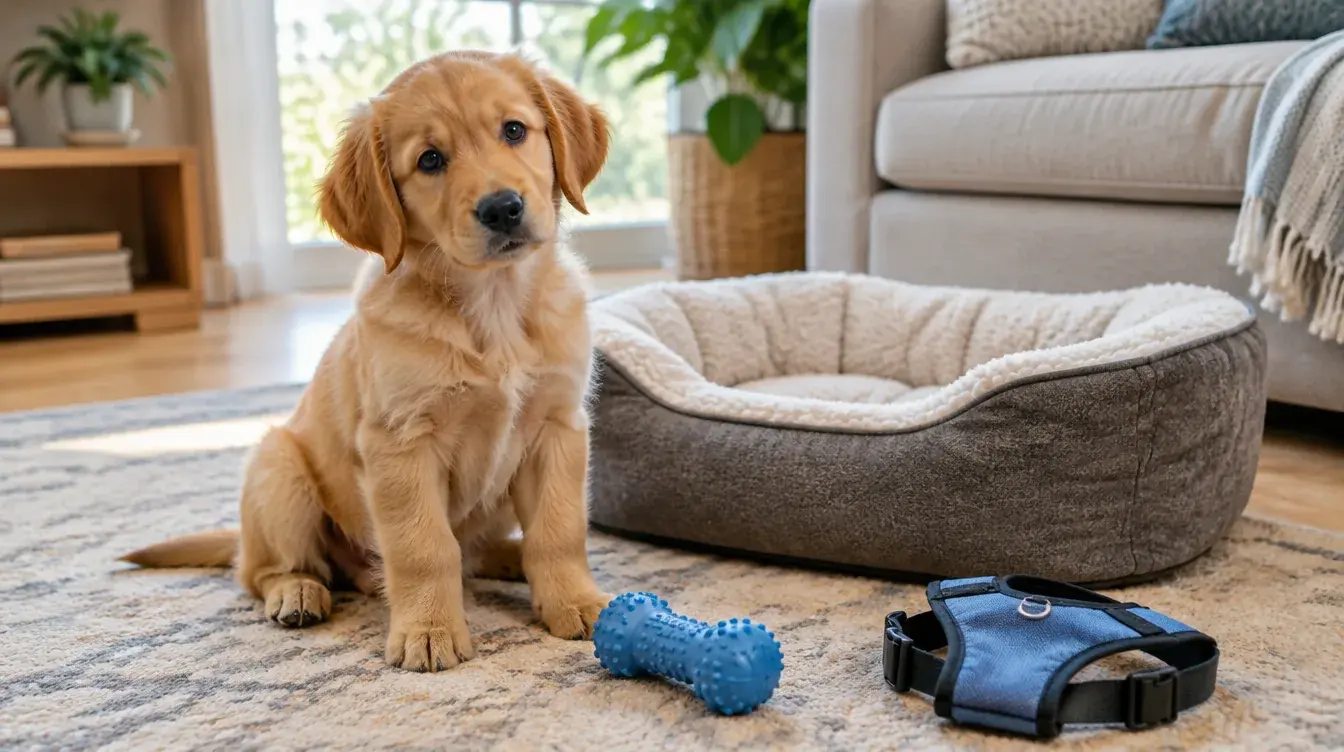
Pet stores will happily sell you forty things for a new puppy. You need about six. Here is the short list, and why each one earns its place.
6 products inside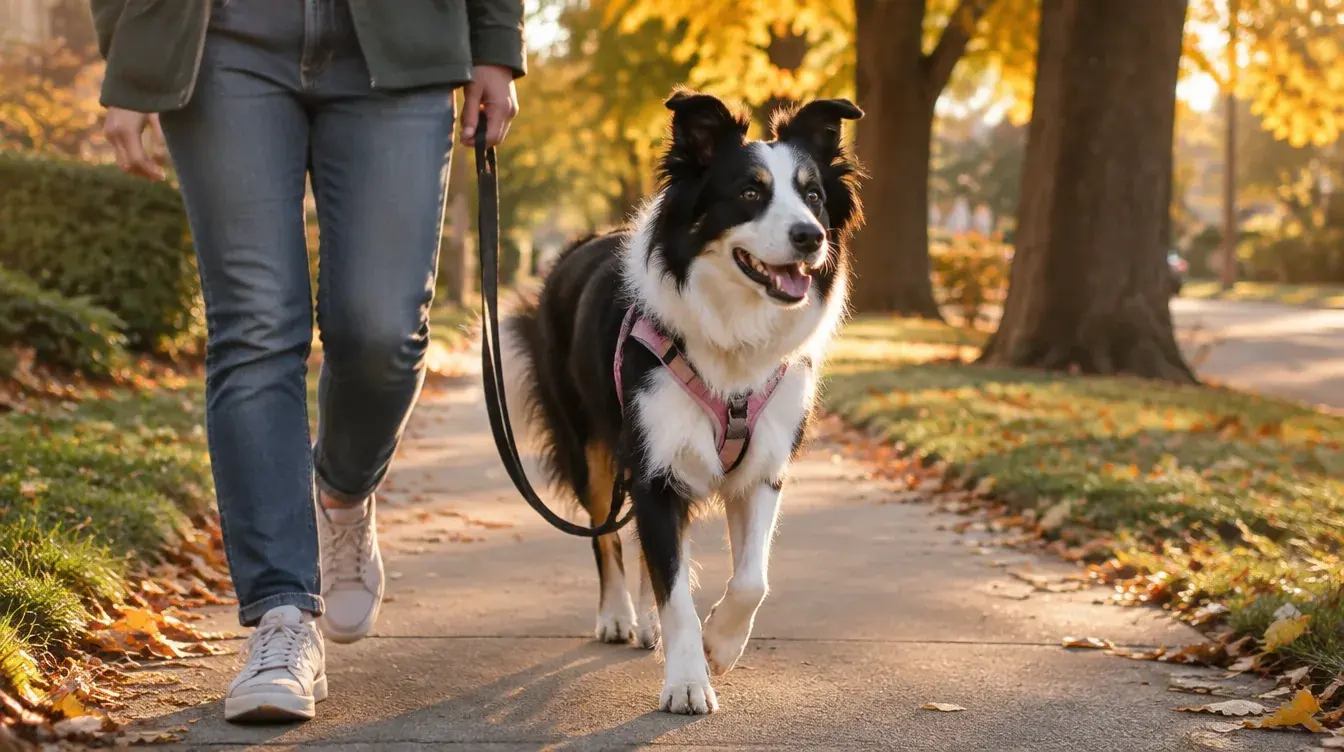
Dogs pull because it works: pulling gets them where they want to go. Change that, and add a harness that makes pulling less effective, and walks get calmer within weeks.
5 products inside
Most pet gifts are under the sofa by New Year. These twelve stay in rotation, and every one comes from our dog and cat guides.
12 products inside